By Dr. Mohamad Hammoud
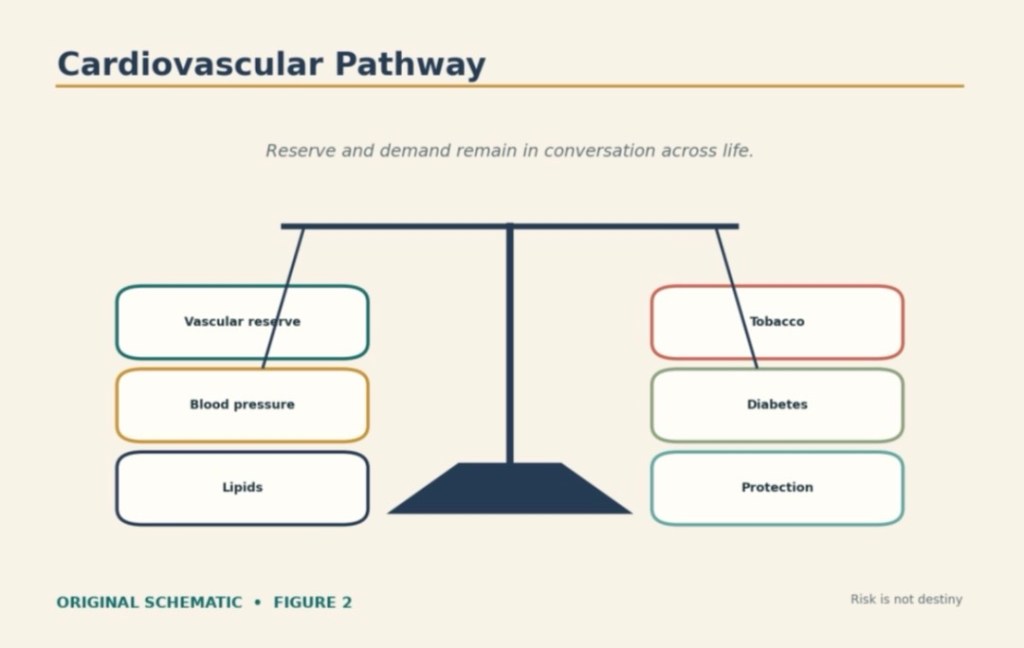
Cardiovascular disease does not begin with the first chest pain. Arteries, cardiac muscle, autonomic control, kidneys, metabolism, inflammation, and behavior interact for decades. Developmental conditions may influence the starting trajectory; adult tobacco, blood pressure, lipids, diabetes, activity, diet, air pollution, and aging usually determine much of the traveled distance.
Early Barker studies linked lower infant or birth weight with later ischemic heart disease. Natural experiments such as the Dutch Hunger Winter added timing-specific associations. Preterm birth and hypertensive pregnancy disorders are associated with later cardiovascular outcomes. Yet these histories do not explain most cases by themselves, and effect estimatesvary with design.
Vessels learn their workload:
Vascular structure and endothelial function develop early. Growth restriction, preterm birth, hyperglycemia, and inflammation can alter experimental vascular responses. In humans, subtle differences in arterial stiffness or cardiac geometry are reported, but measures are not ready for population screening based solely on birth history.
The practical bridge is conventional prevention. Confirm blood pressure.
Treat familial hypercholesterolemia. Avoid smoke. Build fitness. Manage diabetes. Protect sleep. Use medicines when indicated. These actions have evidence far stronger than any “fetal programming” supplement.
EVIDENCE IN FOCUS:
Developmental histories can identify groups with higher average cardiovascular risk. No validated equation can convert one person’s birth weight into a precise lifetime heart-attack probability.
THE NORMAL-WEIGHT HEART RISK:
Mira, born very preterm, had a normal BMI and assumed she could notbe at metabolic risk. Repeated high blood pressure, short sleep, and a strong family history told a different story. Her clinician used the birth history to reinforce – not replace – standard assessment. Treatment began before symptoms.
PROTECTIVE MOVES:
• Preserve pregnancy and birth history.
• Check blood pressure with correct cuff size and confirmation.
• Screen lipids and diabetes according to age, family history, current health, and local guidance.
• Focus on tobacco, movement, food quality, sleep, and indicated treatment.


Leave a comment